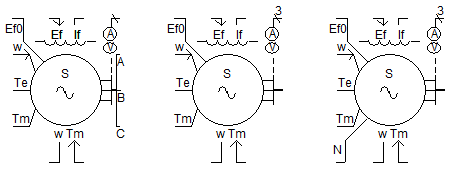
This component includes an option to model two damper windings in the Q-axis and hence, it can be used as either a round rotor machine or a salient pole machine. The speed of the machine may be controlled directly by inputting a positive value into the w input of the machine, or a mechanical torque may be applied to the Tm input.
There are many advanced options included in this component for modelling a synchronous machine. For general use, those parameters identified as 'Advanced' can be left to default values, without changing the expected performance of the machine. These features are aimed mainly at initialising the simulation and to reach the desired steady state quickly.
The desired steady-state conditions may be known from a load flow. Once the steady-state is reached in the simulation, faults, disturbances etc. may be applied to see the transient response. See Start-up and Initialisation for a description of these advanced options.
For more details on basic machine simulation theory, see Introduction to Machines.
|
More: |
Interfacing to the Multi-Mass Torsional Shaft |
|
Machine Name |
|
Text |
|
Just an identifier. A name should be entered here to avoid compilation warnings |
|
|
|
|
|
|
|
No. of Q-axis Damper Windings |
|
Choice |
|
Select the appropriate number of q-axis windings. Normally, One is used to represent a salient-pole machine and Two for a round-rotor machine. |
|
|
|
|
|
|
|
Data Entry Format |
|
Choice |
|
Select Generator or Equiv cct. See Data Entry Formats for more details |
|
|
|
|
|
|
|
Multimass Interface |
|
Choice |
|
Select Enable or Disable. See Interfacing to the Multi-Mass Torsional Shaft for more details |
|
|
|
|
|
|
|
Armature Resistance As |
|
Choice |
|
Select Time Constant or Resistance. See Data Entry Formats for more details |
|
|
|
|
|
|
|
Saturation |
|
Choice |
|
Select Enabled or Disabled. The D-axis saturation is disabled by default. When enabled, a saturation characteristic is applied as given by data points in the Saturation Curve section of the component properties. See Saturation Curve for more details |
|
|
|
|
|
|
|
Type of Settings for Initial Condition |
|
Choice |
|
Select None, Powers or Currents. See Start-up and Initialization for more details |
|
|
|
|
|
|
|
Machine Scaling Factor? |
|
Choice |
|
Select Yes or No. See Coherent Machines for more details |
|
|
|
|
|
|
|
Graphics Display |
|
Choice |
|
Select 3-Phase View or Single Line View |
|
|
|
|
|
|
|
External Neutral Connection |
|
Choice |
|
Select Enable or Disable.
NOTE: Care must be taken when the machine is scaled to model several machines. If the external connections are used, the connected elements should be scaled appropriately. See Coherent Machines for more details. |
Configuration - AdvancedConfiguration - Advanced
NOTE: See Advanced Options for more details on setting these properties.
|
D-axis Transfer Admit Data Available? |
|
Choice |
|
Select Yes or No |
|
|
|
|
|
|
|
Force Currents = 0 at t = 0? |
|
Choice |
|
Select Yes or No |
|
|
|
|
|
|
|
Control Source P out? |
|
Choice |
|
Select Yes or No |
|
|
|
|
|
|
|
Control Machine P out? |
|
Choice |
|
Select Yes or No |
|
|
|
|
|
|
|
Modify Mechanical Dynamics? |
|
Choice |
|
Select Yes or No |
|
|
|
|
|
|
|
Accelerated Flux Build-Up at Start? |
|
Choice |
|
Select Yes or No |
Interface To Machine ControllersInterface To Machine Controllers
|
Supply Terminal Conditions to Exciter |
|
Choice |
|
Select None, Terminal Voltage, Terminal Current or Both Voltage and Current. Some exciters need only the voltage and some need both voltage and real/reactive parts of the currents. This option will create an output scalar, a 2-element vector or a 3-element vector (depending on the option chosen) to be passed to the exciter. The exciter will use this information to initialize its internal variables so that an initialized output is provided to the machine, when the machine is switched from a 'source' to a 'machine'. See Start-up and Initialization for more details |
|
|
|
|
|
|
|
Smoothing Time Constant |
|
REAL |
Variable |
This input is enabled only if an option other than None is chosen under Supply Terminal Conditions to Exciter. This input is used in smoothing the signal sent to the exciter [s] |
|
|
|
|
|
|
|
Output Exciter Initialization Data? |
|
Choice |
|
Select Yes or No. If Yes, the required field voltage is used to initialize the exciter, so that the machine can be switched from source mode to machine mode smoothly. See Start-up and Initialization for more details |
|
|
|
|
|
|
|
Output Governor Initialization Data? |
|
Choice |
|
Select Yes or No. If Yes, the required mechanical torque is used to initialize the turbine and/or governor, so that the machine can be switched from 'locked-rotor' to 'free running' mode smoothly. See Start-up and Initialization for more details |
|
|
|
|
|
|
|
Output Speed |
|
Choice |
|
Select per-unit or radians per second, depending on that needed by the Governor/Turbine models interfaced |
Variable Initialisation DataVariable Initialisation Data
|
Source [0] -> Machine [1] Transition |
|
INTEGER |
Variable |
This input accepts an integer 0 or 1. While 0, the machine is modeled as a simple 3-phase voltage source. When 1, the machine runs in 'constant speed' mode. See Start-up and Initialization for more details |
|
|
|
|
|
|
|
Lock-rotor [0] <-> Normal Mode [1] Transition |
|
INTEGER |
Variable |
This input accepts an integer 0 or 1. While 0, the machine will run in 'constant speed' mode. When 1, the machine will run as a full-blown machine. See Start-up and Initialization for more details |
|
Rating Specified As |
|
Choice |
|
Select Current or MVA to specify the rating. |
|
|
|
|
|
|
|
Voltage Specified As |
|
Choice |
|
Select Line to Neutral or Line to Line to specify the voltage. |
|
|
|
|
|
|
|
Rated RMS Line Current |
|
REAL |
Constant |
Enter the machine rated line current [kA]. |
|
|
|
|
|
|
|
Rated RMS Line-to-Line Voltage |
|
REAL |
Constant |
Enter the machine rated line-to-line voltage [kV]. |
|
|
|
|
|
|
|
Rated MVA |
|
REAL |
Constant |
Enter the machine rated MVA [MVA]. |
|
|
|
|
|
|
|
Base Angular Frequency |
|
REAL |
Constant |
Enter the base angular frequency to which the machine is initialized at time t = 0.0. If the rotor is locked during initialization, the machine will run at this constant speed [rad/s]. |
|
|
|
|
|
|
|
Inertia Constant |
|
REAL |
Constant |
This input represents the stored energy in the rotor at rated speed per machine rating and is typically between 2.0 and 6.0 [MWs/MVA] |
|
|
|
|
|
|
|
Mechanical Friction and Windage |
|
REAL |
Constant |
Enter the mechanical damping constant. This input is typically between 0.0 and 0.05 (0.0 meaning no frictional losses). See Mechanical Friction and Windage for more details [pu] |
|
|
|
|
|
|
|
Neutral Series Resistance |
|
REAL |
Constant |
The real component of fundamental frequency impedance, which is connected between the machine neutral and ground [pu]. This parameter is enabled only if External Neutral Connection is disabled. |
|
|
|
|
|
|
|
Neutral Series Reactance |
|
REAL |
Constant |
The reactive component of fundamental frequency impedance, which is connected between the machine neutral and ground [pu]. This parameter is enabled only if External Neutral Connection is disabled. |
|
|
|
|
|
|
|
Iron Loss Resistance |
|
REAL |
Constant |
This value is provided as a shunt resistance at the machine terminals and should be between 66.7 and 300 [pu] |
|
|
|
|
|
|
|
Number of Coherent Machines |
|
REAL |
Variable |
Enter the number of machines acting coherently. See Coherent Machines for more details. |
Equivalent Circuit Data FormatEquivalent Circuit Data Format
NOTE: See Data Entry Formats for more details on these parameters.
|
Armature Resistance |
|
REAL |
Constant |
Resistance per phase of a stator winding [pu] |
|
|
|
|
|
|
|
Stator Leakage Reactance |
|
REAL |
Constant |
Leakage reactance of a phase winding [pu] |
|
|
|
|
|
|
|
D-Axis Unsaturated Magnet. React. |
|
REAL |
Constant |
Enter the d-axis unsaturated magnetizing reactance (Xd) [pu] |
|
|
|
|
|
|
|
Field Resistance |
|
REAL |
Constant |
Resistance of the field winding [pu] |
|
|
|
|
|
|
|
Field Leakage Reactance |
|
REAL |
Constant |
Leakage reactance of the field winding [pu] |
|
|
|
|
|
|
|
D-Axis Damper Resistance |
|
REAL |
Constant |
Resistance assigned to the winding placed on the d-axis to model the effects of damper bars [pu] |
|
|
|
|
|
|
|
D-Axis Damper Leakage Reactance |
|
REAL |
Constant |
Leakage reactance assigned to the winding placed on the d-axis to model the effects of damper bars [pu] |
|
|
|
|
|
|
|
D: Field-Damp Mutual Leakage Reactance |
|
REAL |
Constant |
Mutual reactance between the field winding and the d-axis damper windings, due to flux that does not cross the air gap [pu] |
|
|
|
|
|
|
|
Q-Axis Magnetizing Reactance |
|
REAL |
Constant |
Enter the q-axis magnetizing reactance (Xq) [pu] |
|
|
|
|
|
|
|
Q-Axis Damper No.# Resistance |
|
REAL |
Constant |
Resistance assigned to the windings placed on the q-axis to model the effects of damper bars [pu] |
|
|
|
|
|
|
|
Q-Axis Damper No.# Leakage React. |
|
REAL |
Constant |
Leakage reactance assigned to the windings placed on the q-axis to model the effects of damper bars [pu] |
|
|
|
|
|
|
|
Q: Damp-Damp Mutual Leak. React. |
|
REAL |
Constant |
Mutual reactance between two q-axis damper windings, due to flux that does not cross the air gap.[pu] |
Generator Data FormatGenerator Data Format
NOTE: See Data Entry Formats for more details on these parameters.
|
Armature Resistance [Ra] |
|
REAL |
Constant |
Enter the armature resistance. This is only enabled if the Armature Resistance As input is set to Resistance [pu] |
|
|
|
|
|
|
|
Armature Time Constant [Ta] |
|
REAL |
Constant |
Enter the armature time constant. This is only enabled if the Armature Resistance As input is set to Time Constant [s] |
|
|
|
|
|
|
|
Potier Reactance [Xp] |
|
REAL |
Constant |
This is related to the stator leakage reactance by the equation XL = XP x Air Gap Factor. Stator Leakage Reactance must be less than the Direct-Axis Reactance, Transient Reactance and Sub-Transient Reactance |
|
|
|
|
|
|
|
Unsaturated Reactance |
|
REAL |
Constant |
Xd, Xq [pu] |
|
|
|
|
|
|
|
Unsaturated Transient Reactance |
|
REAL |
Constant |
Xd', Xq' [pu] |
|
|
|
|
|
|
|
Unsat. Transient Time (Open) |
|
REAL |
Constant |
Tdo', Tqo' [s] |
|
|
|
|
|
|
|
Unsat. Sub-Trans. Reactance |
|
REAL |
Constant |
Xd", Xq" [pu] |
|
|
|
|
|
|
|
Unsat. Sub-Trans. Time (Open) |
|
REAL |
Constant |
Tdo", Tqo" [s] |
|
|
|
|
|
|
|
D: Real Transfer Admit (Armat-Field) |
|
REAL |
Constant |
Enter the d-axis real transfer admittance for the armature field. For more information, see the Configuration - Advanced input parameter window [pu] |
|
|
|
|
|
|
|
D: Imag Transfer Admit (Armat-Field) |
|
REAL |
Constant |
Enter the d-axis imaginary transfer admittance for the armature field. For more information, see the Configuration - Advanced input parameter window [pu] |
|
|
|
|
|
|
|
Air Gap Factor |
|
REAL |
Constant |
This factor is used in the calculation of stator leakage reactance, based on the Potier Reactance: XL = XP x Air Gap Factor |
Saturation CurveSaturation Curve
|
Number of Data Points Available |
|
Choice |
|
|
|
|
|
|
|
|
|
Point # - Current |
|
REAL |
Output |
Enter the I data point for the mutual magnetizing inductance saturation curve. See Saturation Curve for more details [pu] |
|
|
|
|
|
|
|
Point # - PU Voltage |
|
REAL |
Output |
Enter the V data point for the mutual magnetizing inductance saturation curve. See Saturation Curve for more details [pu] |
Initial ConditionsInitial Conditions
See Start-up and Initialization for more details.
|
Terminal Voltage Magnitude at Time = 0- |
|
REAL |
Constant |
Terminal voltage magnitude at start-up [pu]. |
|
|
|
|
|
|
|
Terminal Voltage Phase at Time = 0- |
|
REAL |
Constant |
Terminal voltage phase angle at start-up. Care must be taken if the machine is connected through a Y-D transformer, with the bus side on Y and the machine on D. If the bus phase angle is being determined from a conventional load flow program, Y-D transformations are not taken into account. Therefore, 30° must be subtracted from this angle if obtained from load flow calculations [rad] |
|
|
|
|
|
|
|
Terminal Real Power at Time = 0- ; Out + |
REAL |
Constant |
This parameter is available only if the Type of Settings for Initial Condition input parameter is set to Powers [MW] |
|
|
Terminal Reactive Power at Time = 0- ; Out + |
REAL |
Constant |
This parameter is available only if the Type of Settings for Initial Condition input parameter is set to Powers [MVAr] |
|
|
|
|
|
|
|
|
Initial Rotor Angle ref: Stator |
REAL |
Constant |
This parameter is available only if the Type of Settings for Initial Condition input parameter is set to Currents [rad] |
|
|
D-axis Armature Current; In + |
REAL |
Constant |
This parameter is available only if the Type of Settings for Initial Condition input parameter is set to Currents [pu] |
|
|
Q-axis Armature Current; In + |
REAL |
Constant |
This parameter is available only if the Type of Settings for Initial Condition input parameter is set to Currents [pu] |
|
|
Initial Field Current |
REAL |
Constant |
This parameter is available only if the Type of Settings for Initial Condition input parameter is set to Currents [pu] |
|
|
Initial Machine Speed |
REAL |
Constant |
This parameter is available only if the Type of Settings for Initial Condition input parameter is set to Currents [pu] |
|
|
|
|
|
|
|
|
Time to Ramp Source Limit to Rated |
REAL |
Constant |
This parameter is used to provide a 'soft start', when starting from time = 0.0 as a source, so that network transients are minimized [s]. |
|
|
System Fault Level (Excluding Machine) |
REAL |
Constant |
This parameter is available only if the Control Source P out? or the Control Machine P out? input parameter is enabled [pu] |
|
|
Time Constant for Power Correction |
REAL |
Constant |
This parameter is available only if the Control Source P out? or the Control Machine P out? input parameter is enabled [pu] |
Output Variable NamesOutput Variable Names
|
Real power (pu) |
|
REAL |
Output |
Real power output of the machine. (+) - power flowing out [pu] |
|
|
|
|
|
|
|
Reactive power (pu) |
|
REAL |
Output |
Reactive power output of the machine. (+) - power flowing out [pu] |
|
|
|
|
|
|
|
Neutral voltage (kV) |
|
REAL |
Output |
Voltage at the machine neutral (star) point [kV] |
|
|
|
|
|
|
|
Neutral current to ground (kA) |
|
REAL |
Output |
Machine neutral current [kA] |
|
|
|
|
|
|
|
Load angle (rad) (Lang) |
|
REAL |
Output |
This is the phase difference between the internal voltage and the terminal voltage and is responsible for pushing the power in/out of machine. This angle should not be confused with Internal Phase A Angle with Respect to sin(wt) as described below [rad] |
|
|
|
|
|
|
|
Rotor Mechanical Angle (rad) |
|
REAL |
Output |
This is a saw tooth wave from 0 to 2p radians. The value indicates the position of the rotor [rad] |
|
|
|
|
|
|
|
Internal Phase A Angle with Respect to sin(wt) (Wang) (rad) |
|
REAL |
Output |
This is calculated as Wang = Phase angle of Terminal Voltage + Lang + Integral of (wpu - 1.0) x d(t). |
|
|
|
|
|
|
|
Steady Electric Torque (rad) |
|
REAL |
Output |
Smoothed output of the electrical torque of the machine [rad] |
|
|
|
|
|
|
|
Real/Reactive Power pu Output is Based on Base MVA of |
|
Choice |
|
Select either Single Machine or Total Number of Machines. |
Output Variables for Controller InitialisationOutput Variables for Controller Initialisation
|
Source (0) machine (1) Transition |
|
REAL |
Variable |
Give a variable name. This will change its assigned value from 0 to 1 when the machine is switched from a 'source' to a 'machine'. Use this variable in the exciter model to initialize it |
|
|
|
|
|
|
|
Constant speed (0) normal (1) Transition |
|
REAL |
Variable |
Give a variable name. This will change its assigned value from 0 to 1 when the machine is switched from a 'constant speed operation' to a 'normal machine'. Use this variable in any governor/turbine models to initialize them |
Monitoring of Internal Variables - AdvancedMonitoring of Internal Variables - Advanced
|
Monitor Internal Storage NEXC + |
|
INTEGER |
Constant |
If you wish to monitor any of the internal variables listed in the table below, enter the corresponding NEXC storage array pointer number here. |
|
|
|
|
|
|
|
Name for # Monitored Output |
|
Text |
|
Enter a name to the define the variable created by the corresponding Monitor Internal Storage NEXC + input parameter. |
Table of Internal Storage Numbers
|
NEXC # |
Description
|
|
1 |
is 1.0 if operation as a voltage source is still active, otherwise it is 0.0 |
|
2 |
angle in radians used for the A phase of the voltage source sin wave generator |
|
23 |
VD, d-axis armature voltage |
|
24 |
VFPU, field voltage (not normalized) |
|
25 |
VQ, q-axis armature voltage |
|
26 |
RA, stator resistance |
|
27 |
XA, stator leakage reactance |
|
28 |
RI, iron loss resistance provided as a shunt resistance at the machine terminals |
|
31 |
XMD0, d-axis unsaturated magnetizing reactance |
|
32 |
RFD, resistance of the field winding |
|
33 |
XFD, leakage reactance of the field winding |
|
34 |
RKD, resistance of the d-axis damper winding |
|
35 |
XKD, leakage reactance of the d-axis damper winding |
|
41 |
XMQ, q-axis magnetizing reactance |
|
42 |
RFQ, resistance of the first damper winding on the q-axis |
|
43 |
XFQ, leakage reactance of the first damper winding on the q-axis |
|
44 |
RKQ, resistance of the second damper winding on the q-axis |
|
45 |
XKQ, leakage reactance of the second damper winding on the q-axis |
|
177 |
NFLGAD, is 1.0 if the voltage source power controller has been active at any time previous in the simulation, otherwise it is 0.0. When NFLGAD is 1.0, the input argument VSAADJ is ignored. |
|
301 |
CD2, d-axis armature current |
|
302 |
CFD2, field current |
|
303 |
CKD2, current in the d-axis damper winding |
|
304 |
CQ2, q-axis armature current |
|
305 |
CFQ2, current in the first q-axis damper winding |
|
306 |
CKQ2, current in the second q-axis damper winding |